というNBER論文が上がっている。原題は「The Cold War and the U.S. Labor Market」で、著者はIlyana Kuziemko(プリンストン大)、Donato A. Onorato(コロンビア大)、Suresh Naidu(同)。
以下はその要旨。
We argue that the Cold War contributed to the inclusive growth of the post-war decades. On the labor-demand side, we isolate exogenous shifts in military procurement across states and firms. We show that military procurement increases manufacturing employment and reduces inequality. Overall, the 1950s-to-1990s decline in defense production explains roughly one-quarter of the decline in manufacturing employment and nearly one-tenth of the rise of top-ten income share. On the labor-supply side, the Cold-War-era draft removed millions of young men from the labor force, significantly reducing young male civilian unemployment. Military procurement also increased voter support for hawkish foreign policy.
(拙訳)
冷戦は戦後の数十年における包括的な成長に寄与した、と我々は論じる。労働需要面で我々は、州と企業に跨る軍事調達の外生的な変化を分離した。軍事調達が製造業の雇用を増やし、格差を縮小させることを我々は示す。総じて、1950年代から1990年代に掛けての国防関連の生産の低下は、製造業雇用の減少のおよそ4分の1と、上位10%の所得シェアの上昇の1割近くを説明する。労働供給面では、冷戦時代の徴兵は何百万もの若年男性を労働力から取り除き、若年男性の民間失業を有意に減らした。軍事調達はまた、タカ派的な外交政策への有権者の支持を増やした。
以下はImpact of Cold War on U.S. Labor Market Dynamicsが引用した論文の図。
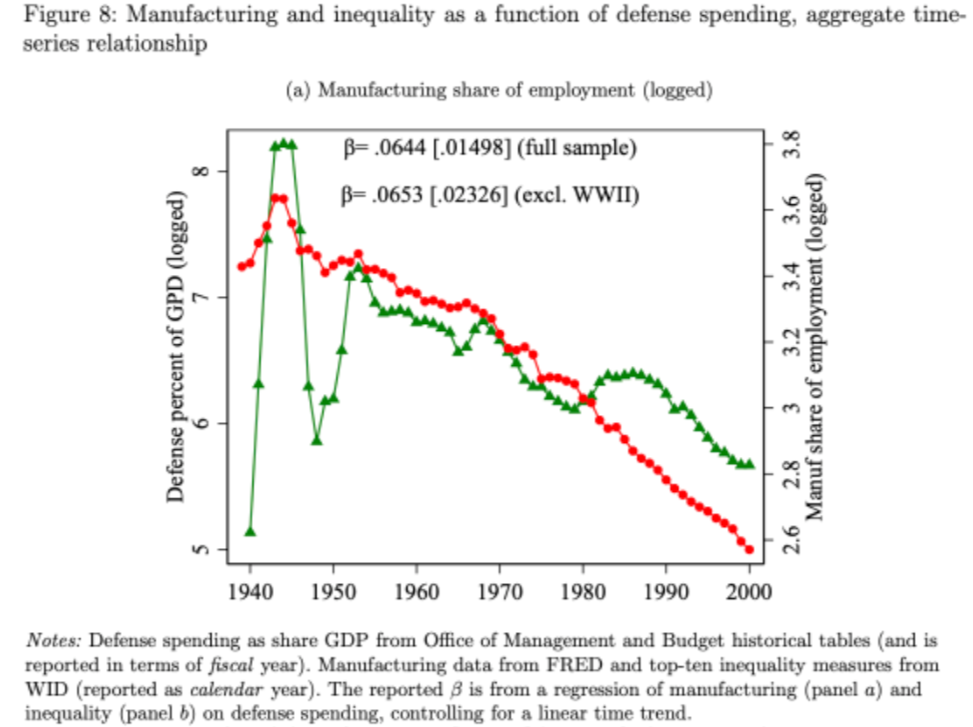
軍事調達の地域経済への乗数効果についてはエミ・ナカムラとジョン・スタインソンが以前に研究したことがあったが(cf. 開放経済相対乗数 - himaginary’s diary、金融財政政策の効果の測定 - himaginary’s diary)、この論文によれば労働市場の需給改善と所得格差縮小にも効果があったとのことである。
